A functional paradigm for program synthesis
Define the system.
Derive the source.
Apple Silicon · Download coming soon
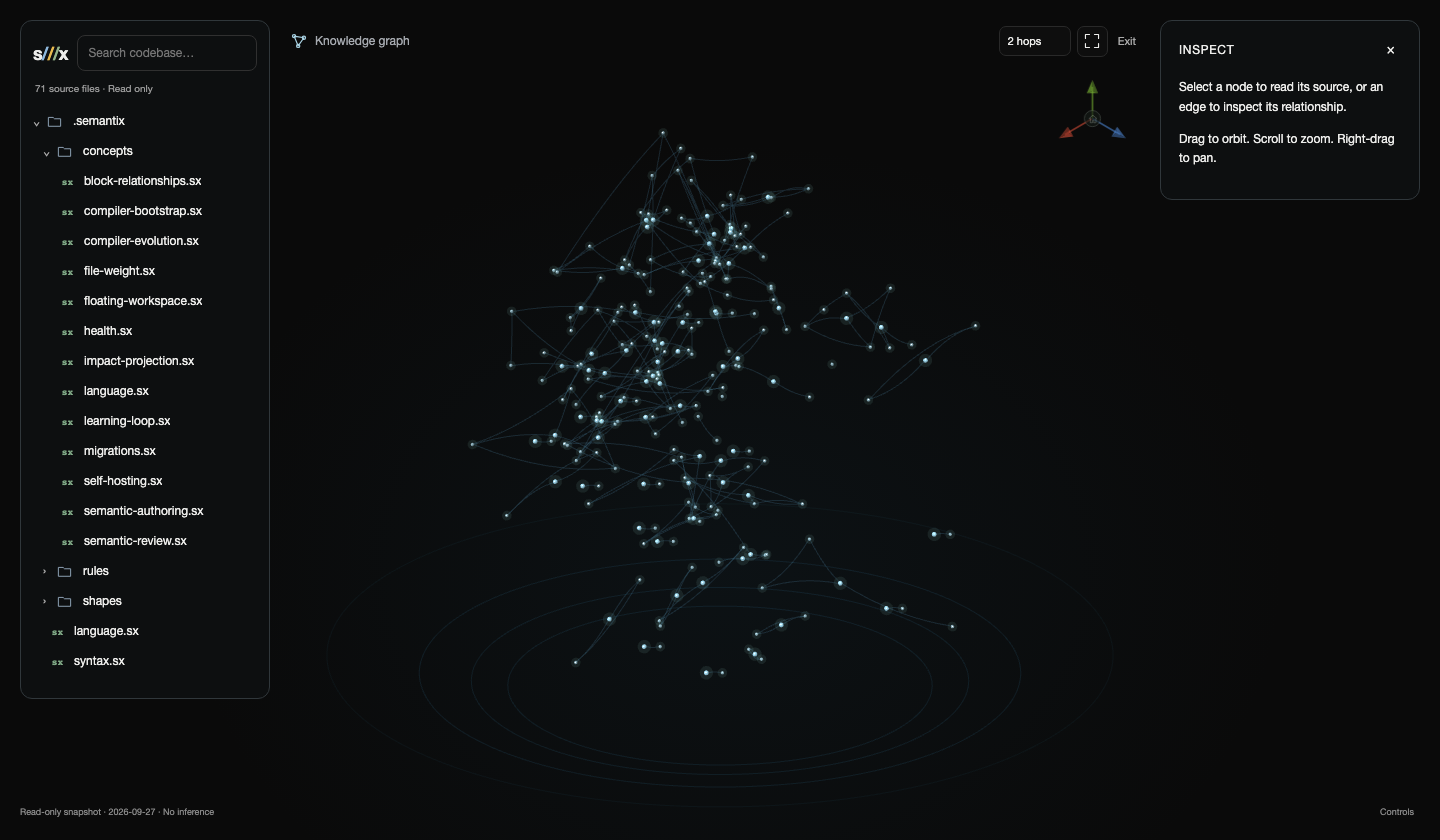
Explore Semantix, in Semantix.
Browse real source. Follow the graph. No inference.THE ENGINEERING MODEL
A workspace for
program synthesis.
Define your system’s concepts, rules, and source patterns. Use local intelligence to develop the implementation, inspect changes, and check the result against its definitions.
Language, rules, and source patterns
- Language & syntax
- Your vocabulary and how you write it. Concepts describe meaning; shapes, facts, and relationships make the model explicit.
- Rules & checks
- State what must hold. Compiler checks, model assessments, and runtime tests provide different kinds of evidence.
- Templates & blocks
- Hold and compose the implementation, then print ordinary source files for your existing toolchain.
- Locks & refinement
- Protect accepted decisions, review proposed changes, and refine the definitions as your understanding improves.
HUMAN CONTROL
You stay in command of the code, the compute, and the data.
Decide what changes, what runs, and where your project data lives. Review the evidence and choose what becomes part of your system.
The desktop workspace runs inference on your machine. Local models propose; you decide what to accept and when to derive the source.
INSIDE SEMANTIX
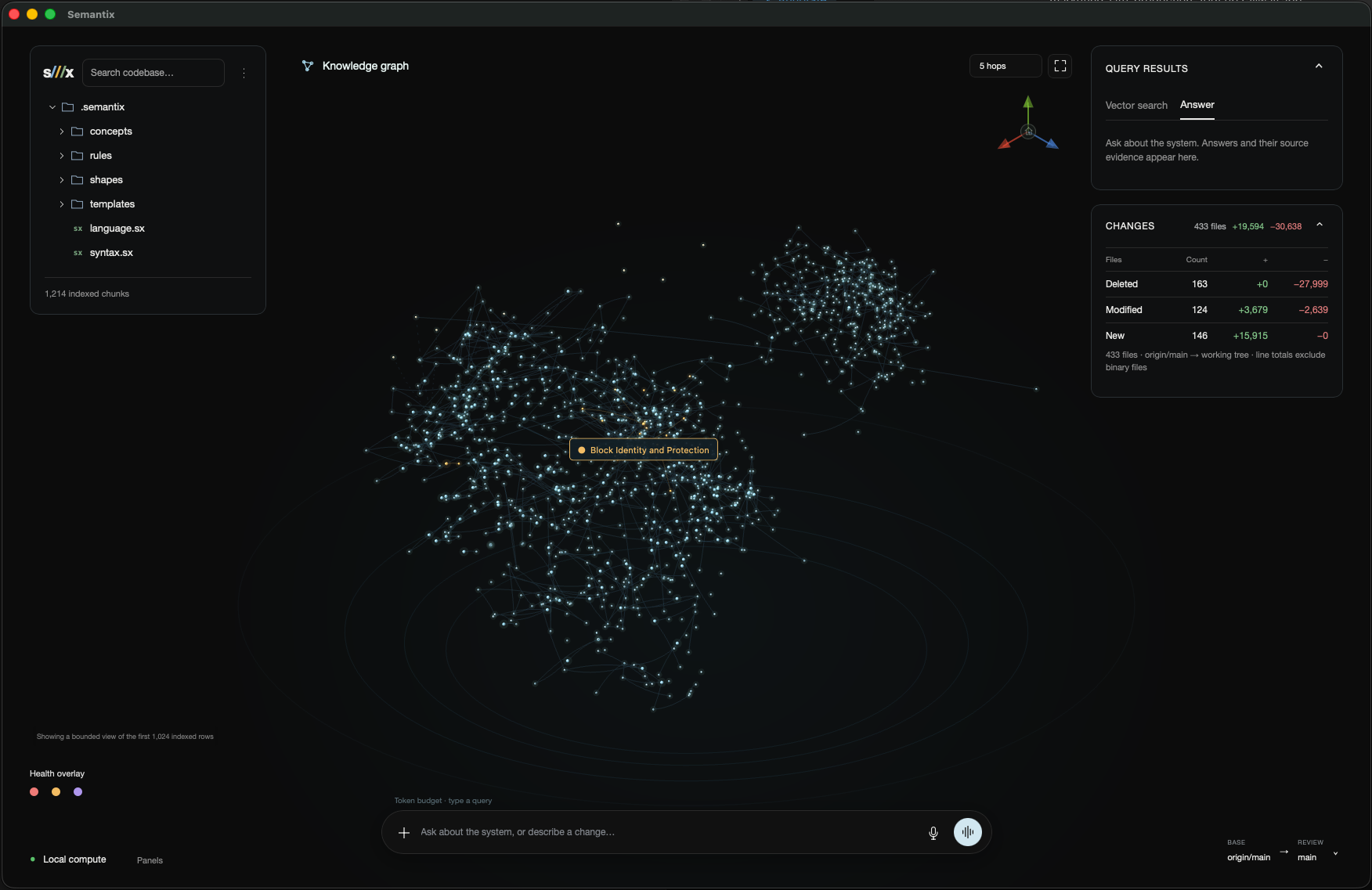
Keep the whole system in view.
Query the meaning.
Trace the consequences.
Refine the system.
THE DISTINCTION
A source of truth
above the code.
What is Semantix?
A language, a syntax, an IDE, and an engineering practice built around one source of truth. Define your vocabulary, structure, and rules in .semantix; compose source code and check it against those definitions. The compiler, semantic retrieval, and AI inference run on your own machine, keeping your working context local.
Source printing is deterministic. Complete autonomous synthesis and automatic refinement remain in development.
How is it different from Codex, Claude, and Kimi?
Semantix moves your working level from individual files to the language and rules that produce them. The codebase becomes an artifact of your model. Local compute and semantic queries put relevant meaning and relationships in reach, so you can reason about a change and refine the decision before generating the source.
How is it different from templates?
Templates are the point. Semantix is rule-based programming of templates that contain your codebase’s source. Blocks hold or compose that source; your language and rules define how it fits together. Change the definition, check the composition, and print the result.
Where do coding agents fit?
Coding agents can still help with implementation, debugging, and unfamiliar code. Semantix changes the starting point: query the codebase by meaning, inspect the relevant relationships, and work on the definitions behind the files. Use an agent where it helps. Your build tools, runtime tests, and engineering judgment still matter.